

TYRE VALUE

INTRODUCTION
There’s no denying the high cost of tyres, but what makes the purchase even harder to bear is the fact that they don’t last forever – one day you’ll begrudgingly have to go through the process of buying a new set all over again.
Unfortunately, not much can be done about the cost of rubber; but that’s not to say you can’t save money on your next set. The following points will show you how to shop for long-term tyre value…
MILEAGE
Don’t make the mistake of gauging tyre value on price alone. A far more accurate measure is COST PER KILOMETRE. If you’re at a dealer, with a pushy sales rep selling “budget” tyres, ask yourself (and the dealer) two questions:
- Why is the tyre cheap?
- What guarantee is the manufacturer offering?
The cost to manufacture a tyre is similar for all brands, so when one tyre is noticeably cheaper than the rest, it’s often due to reduced material (rubber) use, lower compound quality (cheaper steel cords), minimum research and development, and/or a lack of modern additives. (A few leading brands are now using Silica, a revolutionary material that increases tread life and abrasion resistance, as well as reducing the tyre’s rolling resistance for better fuel economy)
Another vitally important consideration is the tyre’s DOT codes, and understanding what quality / safety standards the tyre adheres to. We’ll cover more on this subject in a future column, but for now, you may be surprised to find that some imports fail to meet basic quality standards set by the global tyre industry!
So, how do you gauge long-term tyre value?
Well, if a tyre manufacturer fails to offer a mileage warranty, you can’t, as there’s no guaranteed way of calculating your costs per kilometer. In other words, if a tyre is guaranteed to cover 100 000km, you can calculate its value by dividing the expected mileage by the rand cost. For example, a R4 000 tyre with a mileage guarantee of 100 000km would calculate as follows: 4 000 ÷ 100 000 = 0.04 cents per kilometer.
Without knowing the guaranteed mileage, you can’t calculate the tyre’s true value. So a good place to start your tyre-shopping quest would be to ask your local dealer what mileage guarantee the manufacturer is offering, and if they don’t have such a thing on offer, the bigger question is: why not?
PROTECTION PLAN
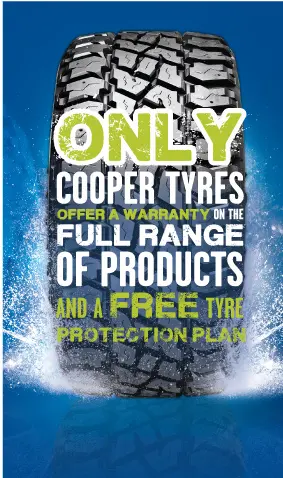
Once you’ve refined your search to a set of mileage-guaranteed tyres, the next step is to consider after-sales support. In other words, is the tyre backed by a Protection Plan or road-hazard warranty?
Naturally, most of these programmes include T&Cs that are designed to maximise value via a tyre maintenance schedule. This service record usually includes tyre rotation, balancing, and wheel alignment – carried out every 8 000km. Good driving habits are also essential, along with maintaining the manufacturer’s recommended tyre pressures.